 Arunava about Football A look at football & the world through my eyes!
Related Articles
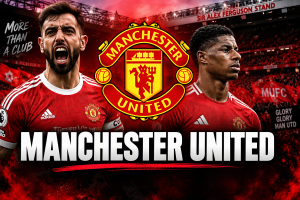 Manchester United have been competing in the Premier League for over 10 seasons without a Premier League title to their name, and yet they’re still one of the most valuable brands in the game of football. The contrast is stark: sponsors are still throwing big money but men’s team unable to match Sir Alex Ferguson’s lasting dominance.
The paradox is that performance doesn’t matter. It is because over the years it has been successful that it has built up an international audience, a cultural identity and a merchandising company that can survive a poor season. For fans following football live results, the contrast between the club’s financial strength and inconsistent performances is particularly striking. But United’s latest reports indicate the security of their brand is not foolproof.
From Ferguson’s dynasty to an uneven recovery
Ferguson retired in 2013 having won United’s twenty championship titles in the English league. After him, a succession of managers (David Moyes, Louis van Gaal, José Mourinho, Ole Gunnar Solskjær, Erik ten Hag and Ruben Amorim) have all brought in different methods but failed to win the Premier League or Champions League.
There have been real successes: FA Cups in 2016 and 2024, League Cups in 2017 and 2023 and the Europa League in 2017. But after United lost the Europa League final to Spurs and dropped to 15th place in the 2024/25 Premier League, domestic inconsistency could no longer be ignored.
A significant counterpoint was provided by the subsequent campaign. United finished third in 2025/26 and proved that it doesn’t have to be like that forever as they secured a spot in the Champions League. But their early results in the league this season (2026/27) again leaves questions about consistency. Michael Carrick’s challenge is to make the occasional recovery into a long-term title challenge.
For football fans who watch matches live, that is why they often feel that commercial placements may be unrelated to what is going on on the field.
The commercial juggernaut: A look at the record-breaking deals
United’s Adidas deal is a testament to the strength of long-term branding. The club signed a new 10-year contract in June 2023 that will expire in July 2035, with a minimum guarantee of £900 million. This is on top of the £750m guaranteed under the original contract, making combined payments over the contract period £1.65bn before contractual adjustments.
It’s important to note that the £900m is not paid annually. Nor is it unconditional in nature. The 2026 annual report of United has confirmed the contractual penalty for missing out on the 2025/26 Champions League, which stands at £10m. Payments can also be influenced by participation and trophy results, indicating that Adidas still values football results.
Another example is Snapdragon. In 2024/25, United become the first club to feature Qualcomm’s chip brand on the front of the shirt, and the BBC estimated that the sponsorship cost above £60m a year. That’s still a media estimate, not an actual contract value that was released publicly.
Shortly after its launch, the partnership was extended through 2029. Qualcomm reported over two billion digital impressions from content that had the shirts along with the United’s global exposure – and that’s a key reason why a tech firm values United’s global exposure even in underperforming seasons.
Commercial revenue: powerful, but not immune
United’s total revenue in the financial year ended June 26, 2026 was £677.6m, an increase of 1.7 percent on the previous year. The drop in commercial income was, however, 4.8 percent, dropping from £333.3 million to £317.3 million.
Sponsorship saw a drop of 14.8 percent in funding to £160.5 million; the decrease was mainly due to the expiry of the previous sponsorship agreement with Tezos training-kit. In the interim, retail, merchandise, apparel and licensing income increased to £156.8 million, partly due to the club’s growing in-house ecommerce business.
These figures should be interpreted with caution. The fall in sponsorships isn’t all because of league position; a specific contract change accounts for a lot of it. Likewise, an overall revenue rise does not prove that United’s commercial engine is impervious to sporting failures.
Why sponsors still pay top dollar: the pillars of United’s commercial power
History that competitors cannot quickly replicate
There’s more to United than exposure. Their history includes the Busby Babes, the tragedy of Munich in 1958, the reconstruction under Sir Matt Busby and Ferguson’s trophy winning days through to the glory of the Class of ’92. Those associations have an emotional weight for sponsors that has been passed down through the generations.
International support and digital reach
United have referred to the Kantar estimate of 1.1 billion fans and followers worldwide in 2019. That number is based on a survey of fandom, not 1.1 billion paying customers or regular match viewers. Its value lies in geographical reach: United draw interest far outside Manchester and the UK.
Digital offers more advertising opportunities, and allows sponsors to launch products, tell stories and engage fans across multiple markets. Follower numbers and impressions, however, are no longer equivalent to sales, and returns are more important than ever as is meaningful engagement.
The matchday connection
The power of the Old Trafford is still strong. Matchgoing fans create atmosphere, tradition and a tangible link between the worldwide commercial brand and its home base. It’s hard to sell something as authentic as that with a commercial.
How long can the paradox continue?
The challenges to United’s business model are twofold. If they are not able to get to the top-level European games, they can lose broadcast revenue, commercial bonuses and prestige. There are more options for younger viewers, however, with all kinds of successful competitors and players and creators attracting attention without needing to be a part of a specific club.
The 2025/26 recovery demonstrated that sporting improvement is possible, however, credibility needs to be rebuilt with more than one good spurt. Resources must be translated into performance and this relies on recruitment, continuity of coaching and financial discipline and a coherent football strategy.
In the end, the Manchester United paradox is not a reflection of the fact that winning doesn’t matter anymore, nor is it a confirmation that commercialism is empty. The modern sponsorships monetise the historic achievement which created a durable global business. The difference is important to investors because these two factors of sponsorship resilience and sporting competitiveness are mutually reinforcing
in a longer term. The biggest question now is how United can capitalise on this investment and become a consistent club before the brand suffers from too many gaps in their form.
